

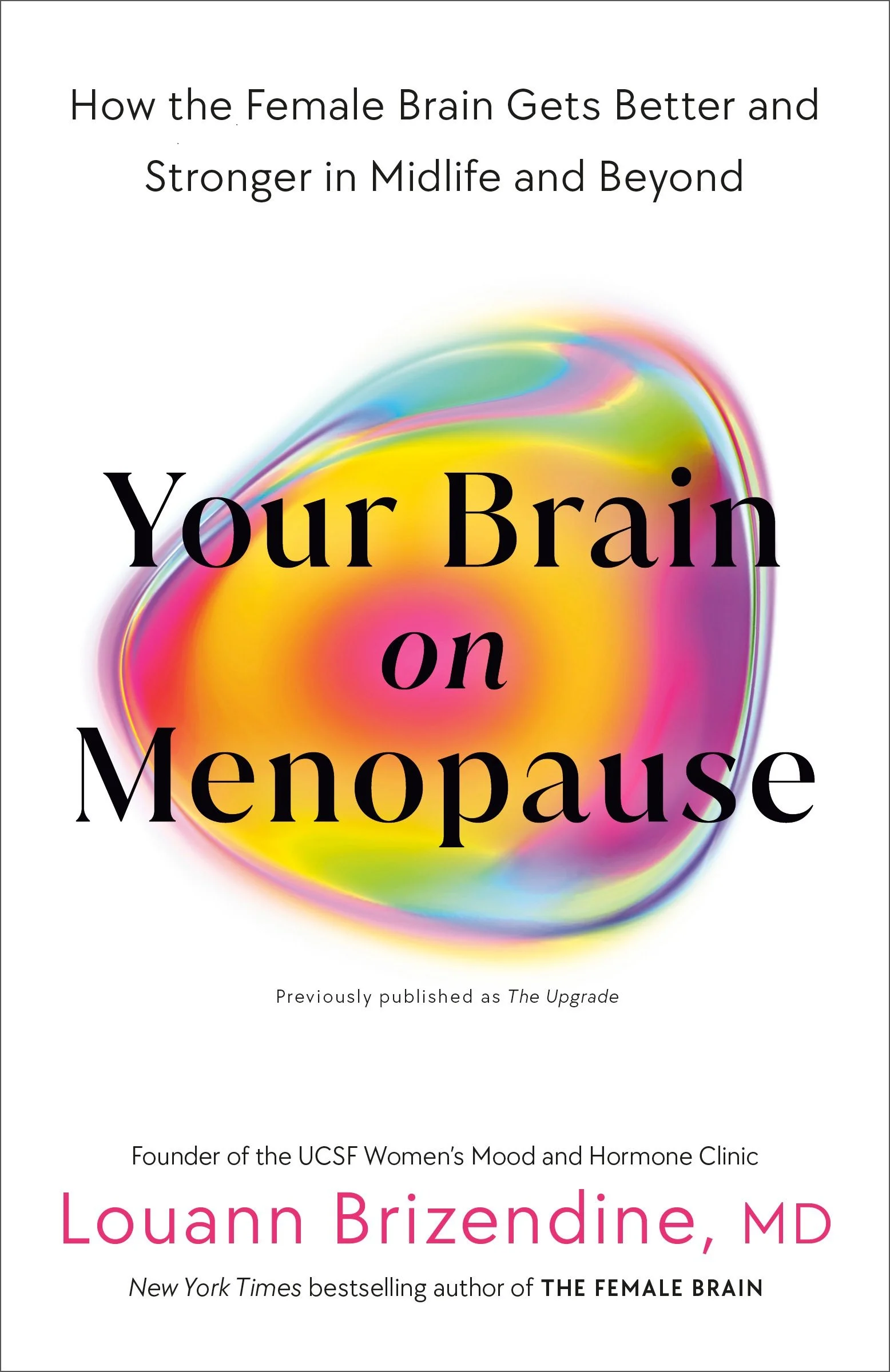
Welcome to the better half of your life!
The New York Times bestselling author of The Female Brain explains how a woman’s brain gets upgraded in midlife, inspiring and guiding women to unlock their full potential.
“This is an important book. I want all women to read it. I wish I had read it years ago!”
—Jane Fonda
Find out what’s in store for women entering this important phase:
What to look forward to in your 30s, 40s, 50s, 60s and beyond.
Why life gets BETTER for women with each passing decade.
How changes in our hormones and our brain help us become more focused, self-confident and direct.
Dr. Brizendine explains the best science-backed strategies for:
Hormones
If timed and handled properly, hormone management can save your life. Brizendine cuts through the controversy to give you the latest guidance for HRT.
Sleep
It’s critical for maximizing the upgrade, and Brizendine shares how to achieve healthy rest during challenging transitions.
Brain Health
The upgraded brain requires special care when it comes to sugar, alcohol, inflammatory foods, and the microbiome. Here’s advice for fueling and maintaining cognitive function for decades.
Exercise
Leg strength correlates directly with healthy brain function at age 80. Here are the strategies for maintaining your strength.
Mindset
Brizendine shows how to seize the opportunities of your midlife brain changes by shifting your mindset and vision with intention.

Dr. Louann Brizendine
Dr. Brizendine was among the first to explain why women think, communicate, and feel differently than men. Now, inspired by her own experiences and those of the thousands of women at her clinic, she has a message that is nothing short of revolutionary: in the time of life typically known as menopause, women’s brains are reshaped, for the better, in a way that creates new power, a bracing clarity, and a laser-like sense of purpose if you know how to seize it.